◦ Powerful API
◦ One-click scaling
What is cloud hosting?
Cloud hosting has revolutionized the way businesses and individuals deploy and manage their online presence. It offers unparalleled flexibility, scalability, and cost-effectiveness compared to traditional hosting solutions, but what is cloud hosting, exactly?
Let’s dive in.
What is cloud hosting?
Cloud hosting is a broad term for a number of web hosting services that provide access to a server, or network of servers, via remote access. Cloud hosting is popularly defined as a hosting service that uses a network of virtual and physical servers, but the term has expanded as cloud technology and hosting options have evolved.
Today, cloud hosting may refer to a network of connected servers or to cloud-based access to hosting resources on a single, remote server.
How does cloud server hosting work?
Cloud hosting works because of virtualization technology, which allows hosting providers to create virtual versions of computing components, like servers, storage devices, networks, and operating systems.
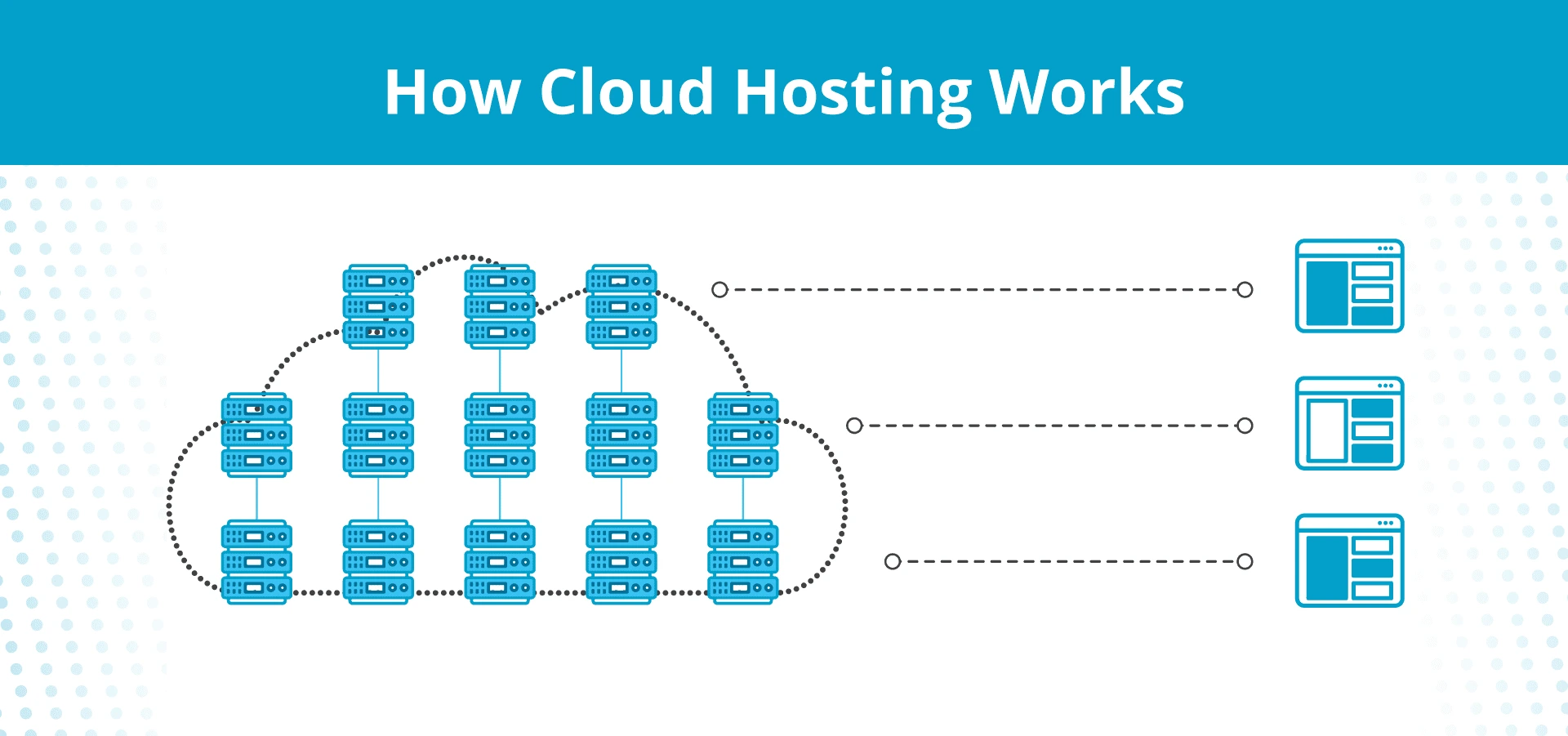
That means cloud hosting can work by creating a virtual server across a network of different, physical servers. This is the popular understanding of cloud hosting and how it works, and it’s beneficial for distributing resources and improving security at the server level.
Virtualization also means that a hosting provider can create multiple virtual machines on a single physical server. Customers lease those virtual machines to enjoy the flexibility of cloud hosting, at a fraction of the cost.
In general, cloud hosting works by storing the files and data for your website in a remote server (or network of servers) that are managed and maintained by the hosting provider. You access that server via the cloud, through a browser portal or a web panel.
Cloud hosting vs web hosting
Web hosting is a broad term that describes a service provided by a third party, offering resources and server space to businesses. This space can be rented for hosting websites, storing data, or running applications.
Cloud hosting is a specific subset of web hosting that utilizes cloud technology, virtualization, and remote servers to deliver resources to businesses.
Cloud hosting vs VPS hosting
The differences between cloud hosting and VPS hosting have narrowed as web hosting has become more sophisticated. Traditionally, the term cloud hosting referred to network of physical servers, whereas VPS hosting is built from one physical server.
As the concept of cloud hosting continues to evolve, leading web hosts now frequently offer a cloud VPS option—a virtual private server accessible via the cloud. VPS hosting is considered a type of cloud hosting, because the server in question is not on premises and must be accessed via the cloud.
Cloud hosting vs dedicated hosting
Dedicated hosting provides an entire physical server for one organization’s exclusive use, offering high performance and maximum flexibility. Traditionally, a dedicated server would be installed on premises, drawing a clear distinction between cloud hosting vs dedicated.
But installing physical servers is extremely cost-prohibitive, which is where cloud technology saves the day. Dedicated cloud hosting enables a provider to reserve a complete server—in the hosting provider’s physical space—for a single client, who accesses that server using cloud technology.
Cloud hosting vs shared hosting
Shared hosting is another type of cloud hosting and the most basic form of web hosting. With a shared hosting arrangement, multiple customers share a cloud server to host their websites and apps.
Cloud hosting can distribute a virtual computer across multiple servers, but in many cases, including shared cloud hosting, it simply provides cloud-based access to part of a single, shared server.
6 benefits of cloud hosting
Cloud hosting offers numerous advantages over traditional hosting methods, making it an attractive option for businesses of all sizes.
1. Scalability
Cloud hosting allows for easy scaling of resources to match demand. Whether a website experiences sudden traffic spikes or steady growth, cloud hosting can quickly adapt to provide the necessary computing power.
2. Cost
With cloud hosting, users only pay for the resources they consume. This pay-as-you-go model eliminates the need for large upfront investments in hardware and allows for more efficient resource allocation.
3. Security
Cloud hosting providers typically offer advanced security measures, including regular backups, firewalls, and encryption. The distributed nature of some cloud hosting also provides an extra layer of protection against hardware failures and DDoS attacks.
4. Flexibility
Cloud hosting enables users to customize their hosting environment to meet specific needs. This flexibility allows for easy deployment of various applications and services without being constrained by physical hardware limitations.
5. Performance
Cloud hosting can deliver superior performance compared to traditional hosting methods by distributing resources across multiple servers or using virtualized servers on a single machine. These architectures ensure faster load times and better handling of high-traffic situations.
6. Time to market
Cloud hosting significantly reduces the time required to deploy new applications or websites. With instant provisioning of resources, businesses can quickly launch new projects and respond to market demands more efficiently.
Types of cloud hosting
Cloud hosting comes in various forms, each tailored to different needs and requirements.
- Public cloud: Shared infrastructure available to the general public, offering cost-effective solutions for many businesses.
- Private cloud: Dedicated cloud infrastructure for a single organization, providing enhanced control and security.
- Hybrid cloud: A combination of public and private cloud services, allowing businesses to optimize their hosting strategy for different workloads.
- Managed cloud hosting: A fully managed cloud hosting solution where the provider handles all aspects of server management and maintenance, ideal for businesses lacking in-house IT expertise.
Cloud hosting options from Liquid Web
Liquid Web has been providing industry-leading cloud hosting solutions for decades. We offer guaranteed 100% network and power uptime, instant scalability, unbeatable security, and much more.
Cloud VPS
Cloud hosting for flexible, instant cloud environments and affordable rates
Cloud servers
Cloud hosting for rapidly provisioning cloud environments with bare metal control
Managed cloud
Cloud hosting for full server management and industry-leading support
Cloud hosting FAQs

Brooke Oates is a Product Manager at Liquid Web, specializing in Cloud VPS and Cloud Metal, with a successful history of IT/hosting and leadership experience. When she’s not perfecting servers, Brooke enjoys gaming and spending time with her kids.