The hosting habits and evolution of hyper-growth businesses
Hyper-growth businesses – companies experiencing exceptionally rapid and sustained expansion, often with a compound annual growth rate (CAGR) of 40% or higher – face unique challenges in scaling their hosting infrastructure to meet soaring demand. For these companies, maintaining this level of growth requires agile, high-performance hosting solutions to handle increasing traffic, ensure security, and optimize speed.
Liquid Web surveyed hyper-growth businesses across industries, including IT, retail, hospitality, real estate, healthcare, and education, to understand how they are addressing their hosting needs. The findings offer insights into their budgets and emerging trends in hosting solutions, and highlight the vital role of hosting in supporting sustained, aggressive growth.
Key points
- 61% of hyper-growth businesses experienced hosting and server problems within the last year, and 40% switched to cloud hosting to maintain their sales and revenue.
- 2 in 3 hyper-growth businesses plan to increase their hosting budgets in the next year, by an average of 23%.
- 88% of hyper-growth businesses that upgraded their hosting this year report a good ROI.
Handling website traffic surges
To sustain their growth trajectory, hyper-growth businesses must rely on resilient, high-performance hosting infrastructure capable of handling traffic spikes. This often involves shifting to cloud, VPS, or bare metal hosting to optimize speed and availability based on specific growth needs.
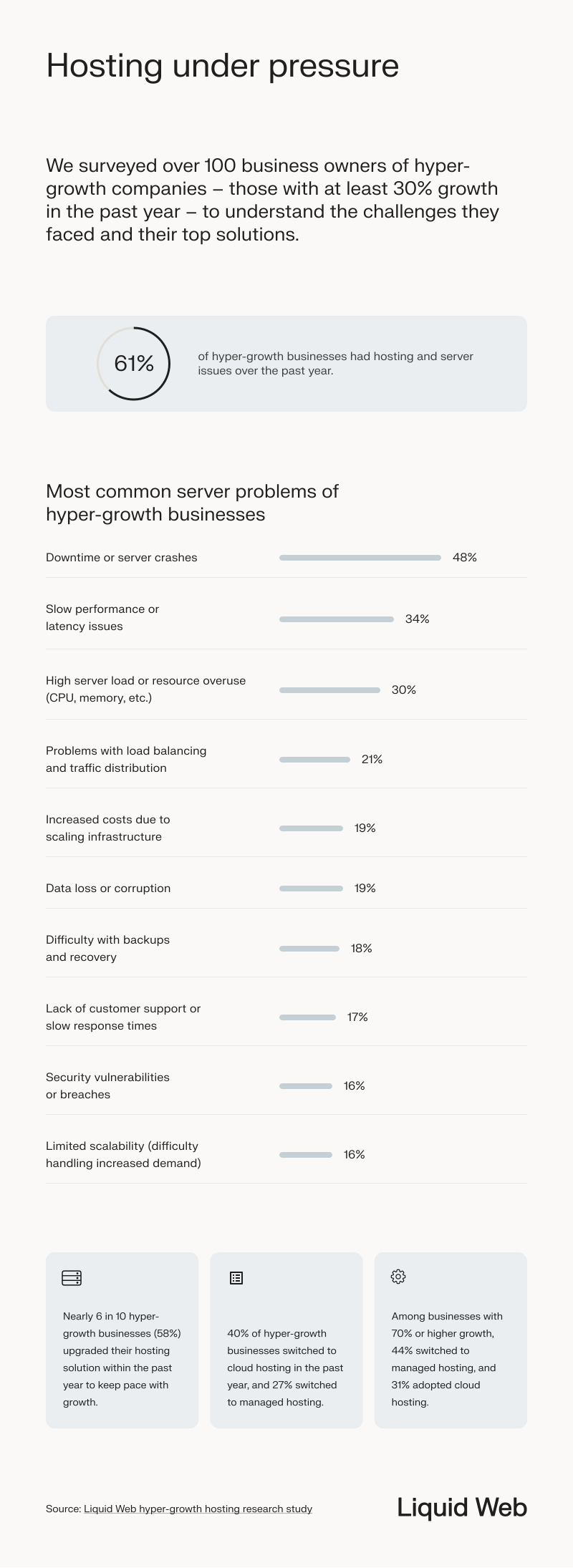
Rapid expansion has strained the infrastructure of many companies over the last 12 months. More than half of hyper-growth businesses – 61% – encountered hosting and server issues in the past year.
48%
Experienced downtime or server crashes
34%
Experienced slow performance or latency
30%
Experienced high server load or latency issues
Challenges like these have driven 40% of hyper-growth companies to adopt cloud hosting, while 27% switched to managed hosting to safeguard sales and revenue.
Hyper-growth companies were most likely to abandon shared hosting as their initial solution, with 34% starting on shared hosting but only 22% continuing to use it.
Choosing the right hosting solution for scalable growth
While cloud hosting offers scalability and flexibility, VPS (virtual private server) hosting provides dedicated resources at a lower cost. This option appeals to businesses that need more control without the high investment of bare metal servers. For companies requiring maximum performance and full hardware control, bare metal hosting can be an ideal solution.
These choices allow hyper-growth businesses to tailor their hosting to match both current demand and anticipated expansion, ensuring seamless uptime and operational continuity. When evaluating hosting solutions, hyper-growth businesses said they prioritize the following features to prevent costly downtime and maintain customer trust.
Top 10 features business owners look for in hosting solutions
- Reliability
- Security
- Speed
- Customer service
- Uptime
- Cost-efficiency
- Performance monitoring and analytics
- Flexibility
- Data privacy and compliance
- Scalability
Hosting budgets for hyper-growth
Below, we explore how hyper-growth businesses are investing in hosting and other key areas to sustain rapid growth.
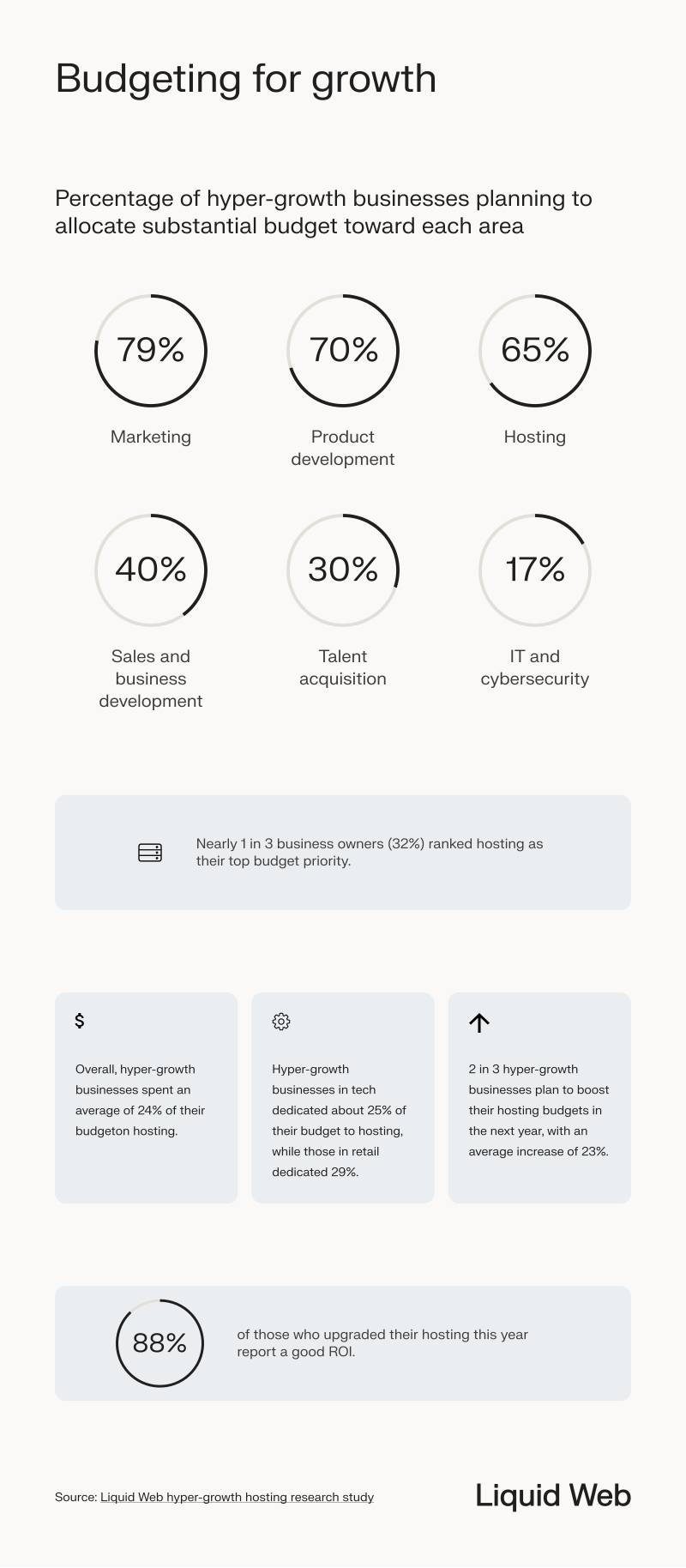
There’s a clear trend among hyper-growth businesses toward increased investment in hosting infrastructure, with 2 in 3 planning to expand their budgets by an average of 23% over the next year.
Improved hosting leads to positive ROI
The positive impact of recent upgrades is also evident, as 88% of businesses that enhanced their hosting solutions this year reported a good return on investment (ROI). This demonstrates the tangible benefits of allocating resources to high-performance, resilient hosting environments.
To evaluate the ROI of these investments, hyper-growth businesses track a range of performance metrics that connect hosting capabilities to business outcomes.
Top 10 metrics business owners use to evaluate hosting ROI
- Server response time
- Conversion rate
- Revenue generated from website
- Monthly or annual traffic growth
- Page load time
- Cost per visit or user
- Website uptime percentage
- Security incidents or breaches prevented
- Hosting cost relative to business revenue
- SEO performance
Future hosting challenges and improvement goals
We’ll next examine the primary hosting challenges anticipated by these companies and the optimizations they’re most interested in implementing.
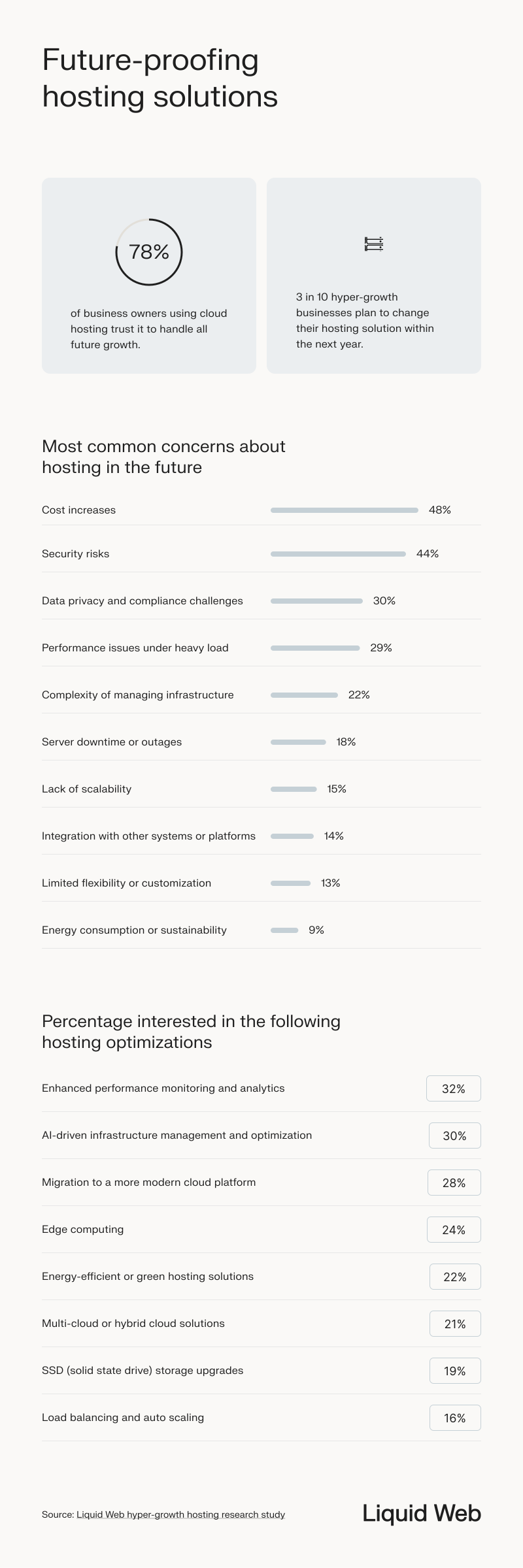
Cloud hosting is a trusted solution for scalability, with 78% of business owners confident in its ability to support their future growth.
As for hyper-growth business owners, 30% of these companies said they plan to change their hosting solution in the coming year, likely in response to evolving needs or emerging technologies.
Looking ahead, hyper-growth businesses expressed concerns about future hosting challenges, including:
- Cost increases: 48%
- Security risks: 44%
- Data privacy and compliance challenges: 30%
- Performance issues under heavy load: 29%
- Complexity of managing infrastructure: 22%
As a result, hyper-growth businesses are looking for specific optimizations when choosing an infrastructure provider.
Top 5 hosting optimizations business owners want
- Enhanced performance monitoring and analytics
- AI-driving infrastructure management and optimization
- Migration to a more modern cloud platform
- Edge computing
- Energy-efficient or green hosting solutions
Business owners are eyeing a handful of top hosting solutions. Their most desired optimization is enhanced performance monitoring and analytics. Real-time insights can help them catch issues before they impact users, boosting uptime and keeping everything running smoothly – just what a growing business needs.
AI-driven infrastructure management has also become a priority as business owners seek to automate routine tasks with AI tools and optimize resources to handle demand spikes. And finally, there’s a desire to move toward modern cloud platforms, which could provide the scalability and resilience these businesses need.
For the businesses leveraging AI to modernize their own systems, GPU hosting has become a top-desired solution.
Powering future growth with reliable hosting
As hyper-growth businesses navigate rapid expansion, resilient hosting solutions are more essential than ever. With almost 9 in 10 seeing positive returns from recent upgrades, these companies recognize the value of investing in robust, scalable infrastructure. By continuing to enhance their hosting strategies, they’re not just meeting today’s demands – they’re building a foundation for sustainable, long-term growth.
“Think of hosting as a strategic investment, not just an operational cost. For hyper-growth businesses, prioritizing reliable, scalable hosting supports today’s demands but also secures tomorrow’s success.”
Reid Peifer
Chief Creative Officer for Liquid Web

Fair use statement
Feel free to share this content about website speed and consumer behaviors for noncommercial purposes, but please credit this page with a dofollow link as the original source.
Share this content
<a href="https://www.liquidweb.com/white-papers/hypergrowth-business-hosting-habits/" rel="dofollow">Learn the critical role hosting plays in hyper-growth businesses.</a>
Learn more
Elevate scalability with a VPS
Discover Liquid Web’s flexible VPS hosting options.
